





SUPER THIN & FLEXIBLE
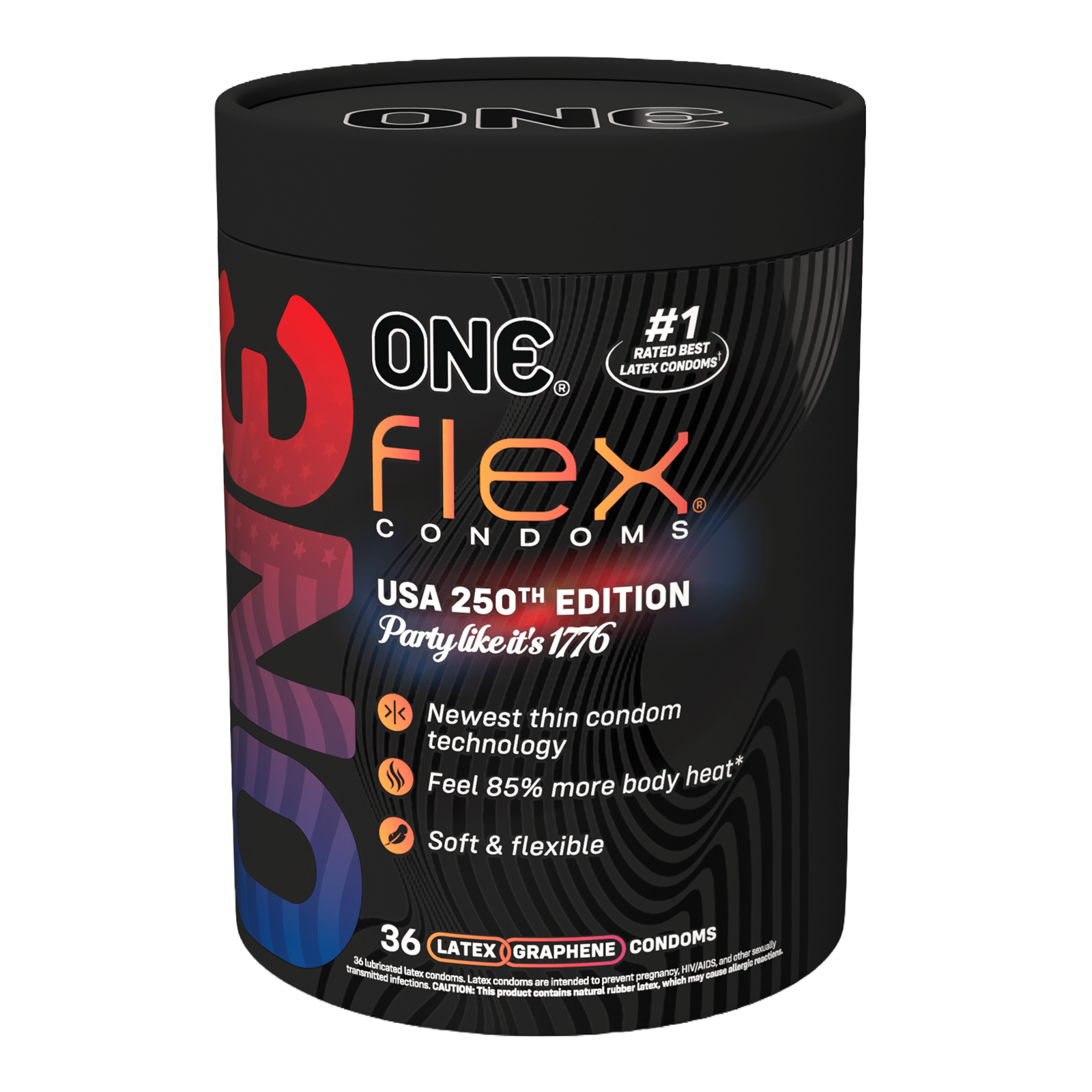
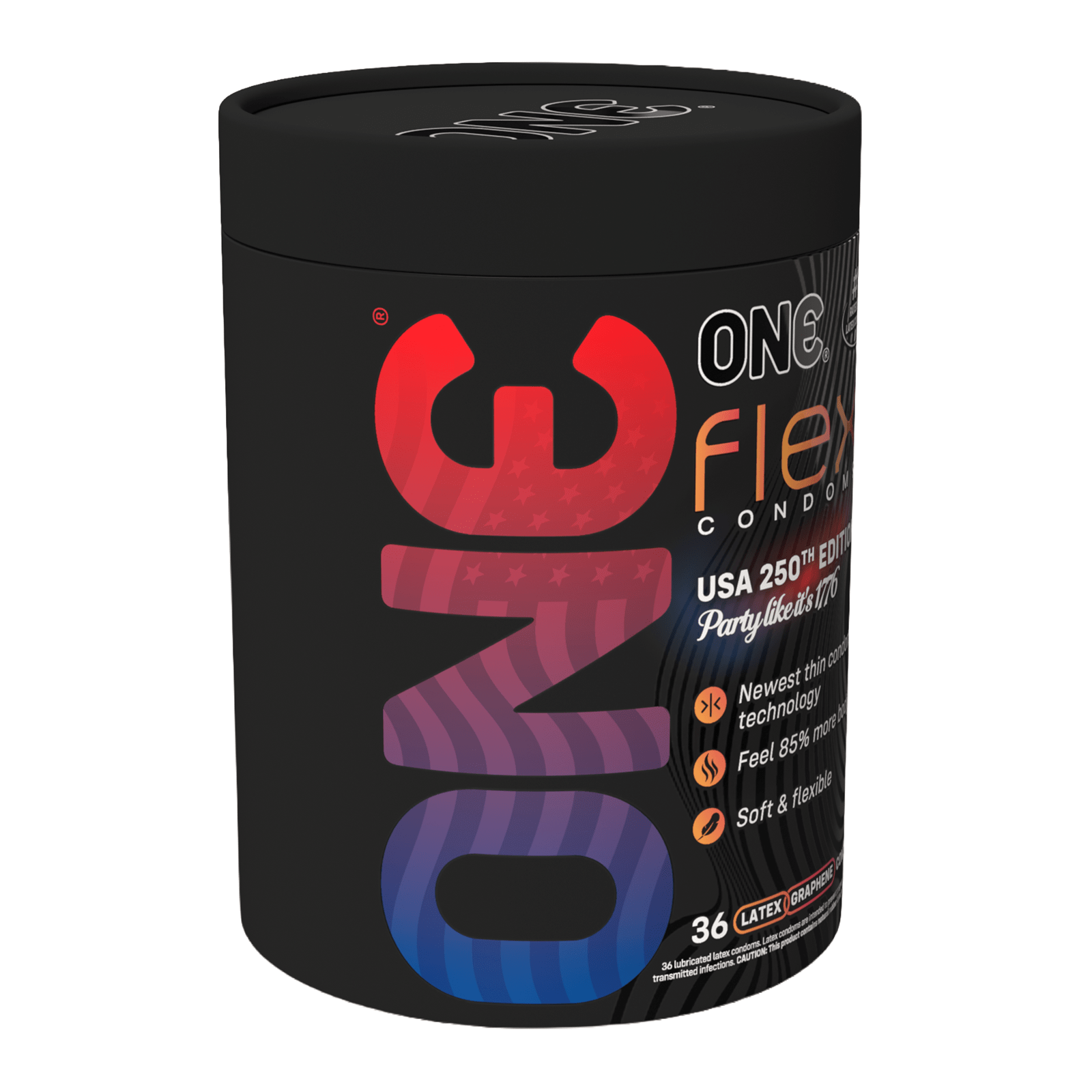
ONE® Flex® Graphene Condoms - America 250 Series
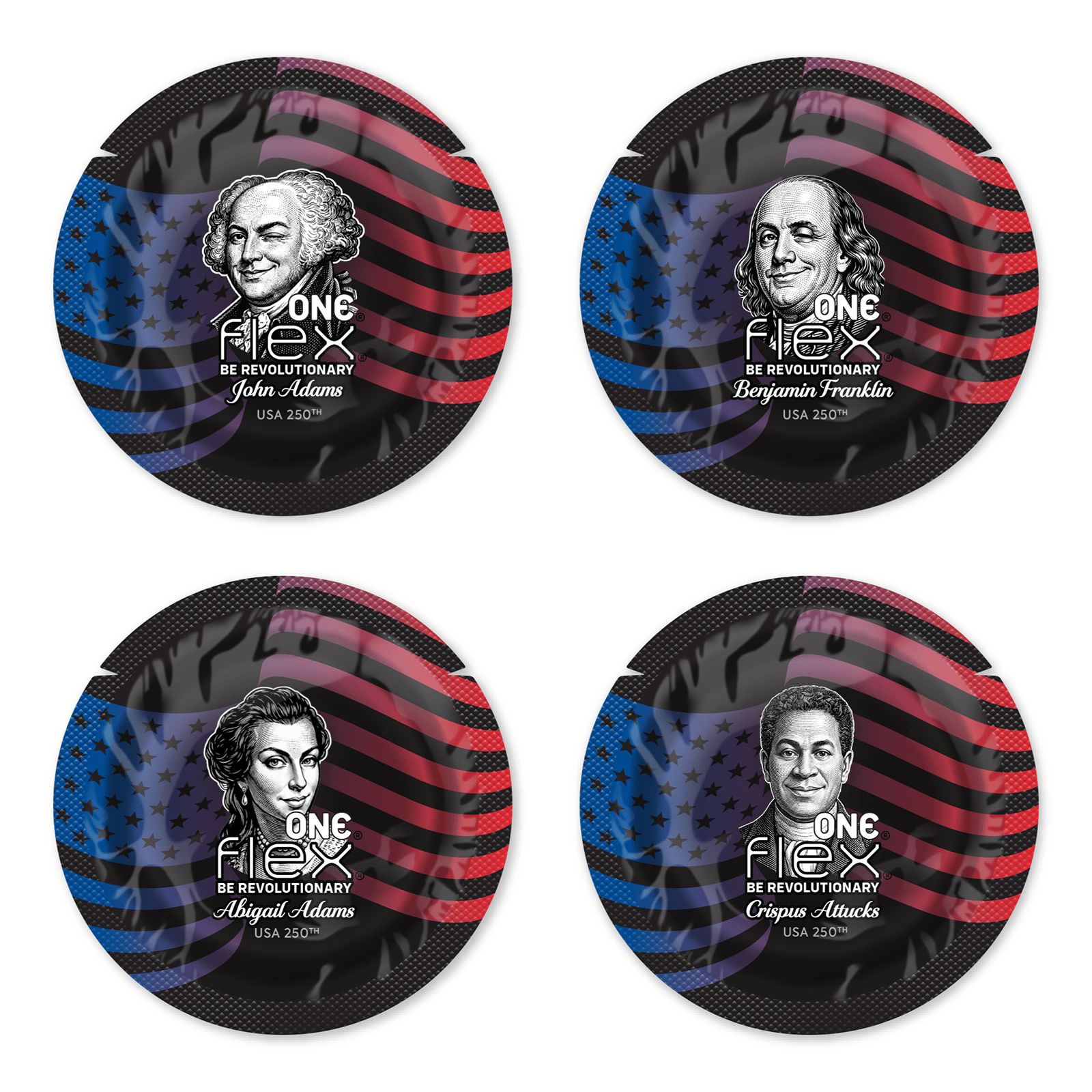
- In honor of the USA 250th anniversary, this limited-edition wrapper collection commemorates American Revolutionaries.
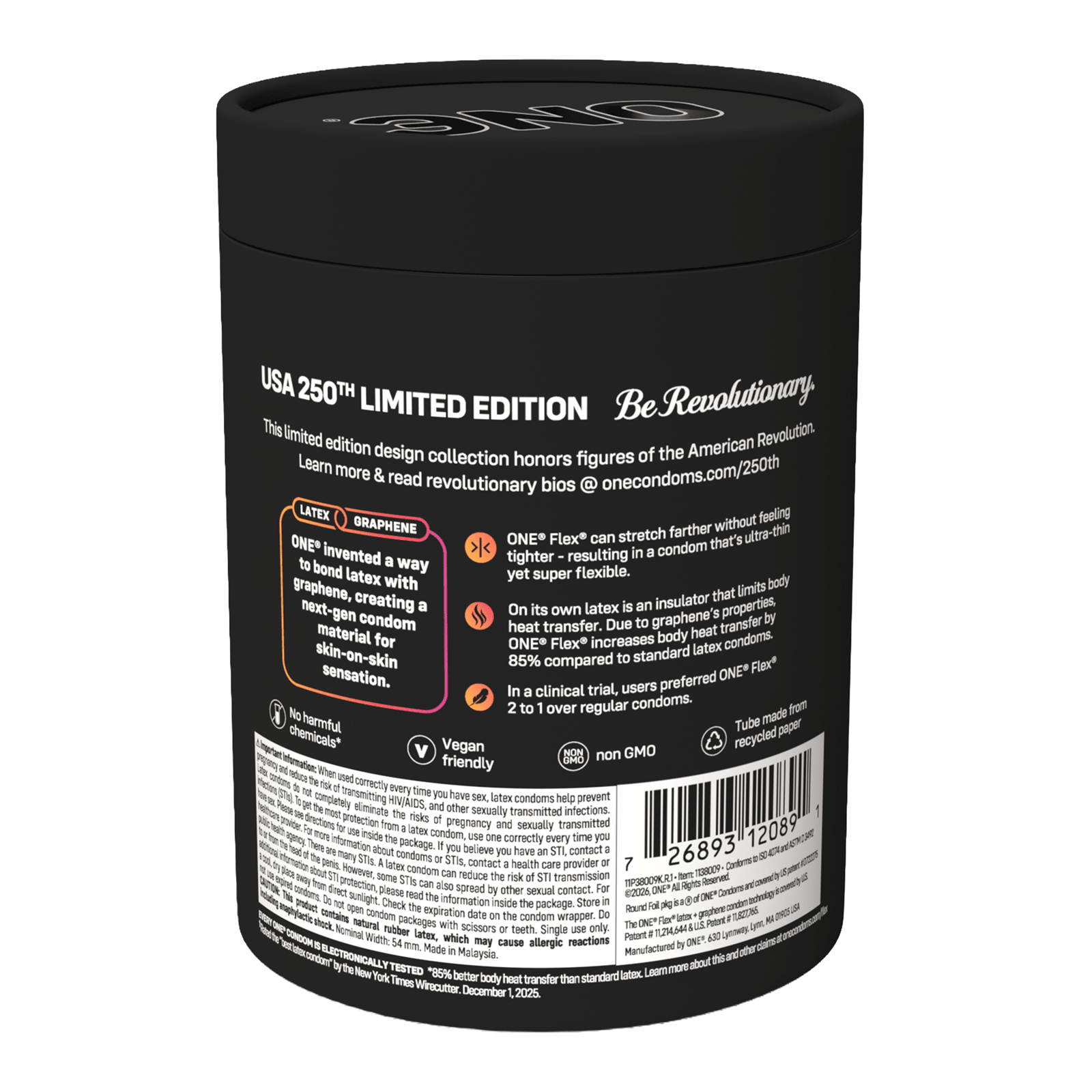
- ONE® Flex® is super thin, flexible, and features 85% better body heat transfer for a more natural feel.
- Uses Sensatex®, our proprietary, ultra-soft, vegan latex.
Discreet shipping - always!


The Full Details
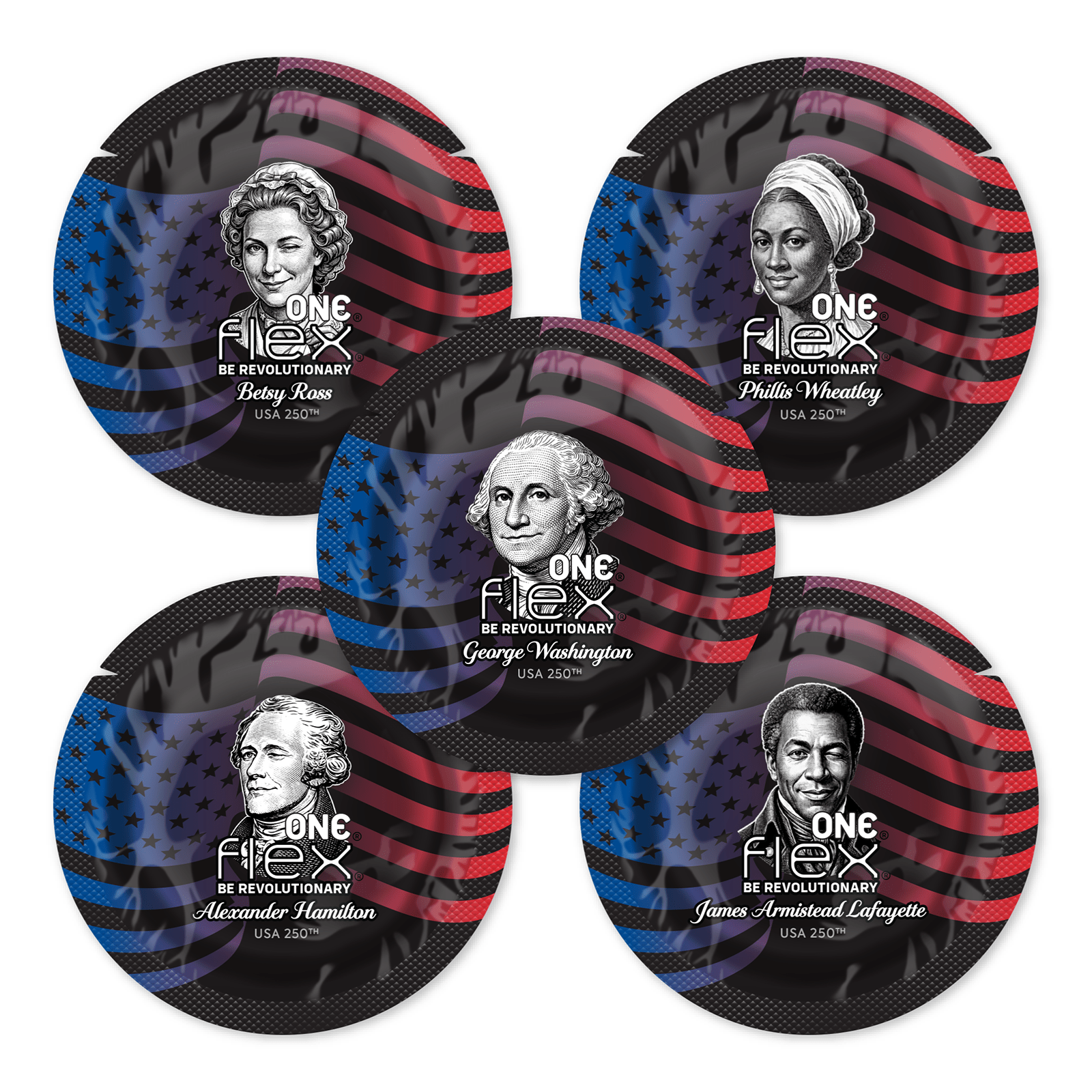
In honor of the 250th Anniversary of American Independence, ONE® Condoms turned its signature round wrappers into a tribute to some of the original disruptors. This limited-edition collection commemorates American Revolutionaries — the bold icons who wove the very fabric of this nation. This limited series features nine of those American Revolutionaries: George Washington, James Lafayette, Betsy Ross, Alexander Hamilton, Crispus Attucks, Ben Franklin, Abigail Adams, John Adams, and Phillis Wheatley.
The designs feature the American Flag and a revolutionary. These commemorative designs are printed on the ONE® Flex® condom style. ONE® Flex® revolutionized the condom industry in 2023 by being the first condom in the world enhanced with the wonder material graphene. Flex is super thin yet flexible — and features 85% better body heat transfer than standard latex condoms. Rated the #1 latex condom by the New York Times WireCutter, ONE® Flex® is part of our Next Generation Condoms®.
What's Inside
Package of 36 ONE® Flex® condoms featuring limited edition American Revolutionary condom wrapper designs. Not all designs may appear in every package.
Condom nominal width: 54mm; average length: 191mm.
The ONE® Difference
All ONE® Condoms are triple tested for safety and made with natural rubber latex and lubricated with premium silicone lubricant. All our lubricants and condoms are vegan-friendly, non-GMO, and FDA-cleared. ONE® Condoms feature unique designs on our trademark, round wrappers. Our lubricants are dermatologist tested.
Pairs well with
Free shipping over $15
Private & Discreet
Earn perks with the Momentum Loyalty Program
Secure Checkout
ONE® Flex® Graphene Condoms - America 250 Series
If you have any questions, you are always welcome to contact us. We'll get back to you as soon as possible, within 24 hours on weekdays.
-
Shipping Information
Use this text to answer questions in as much detail as possible for your customers.
-
Customer Support
Use this text to answer questions in as much detail as possible for your customers.
-
FAQ’s
Use this text to answer questions in as much detail as possible for your customers.
-
Contact Us
Use this text to answer questions in as much detail as possible for your customers.
Limited Edition America 250th Series
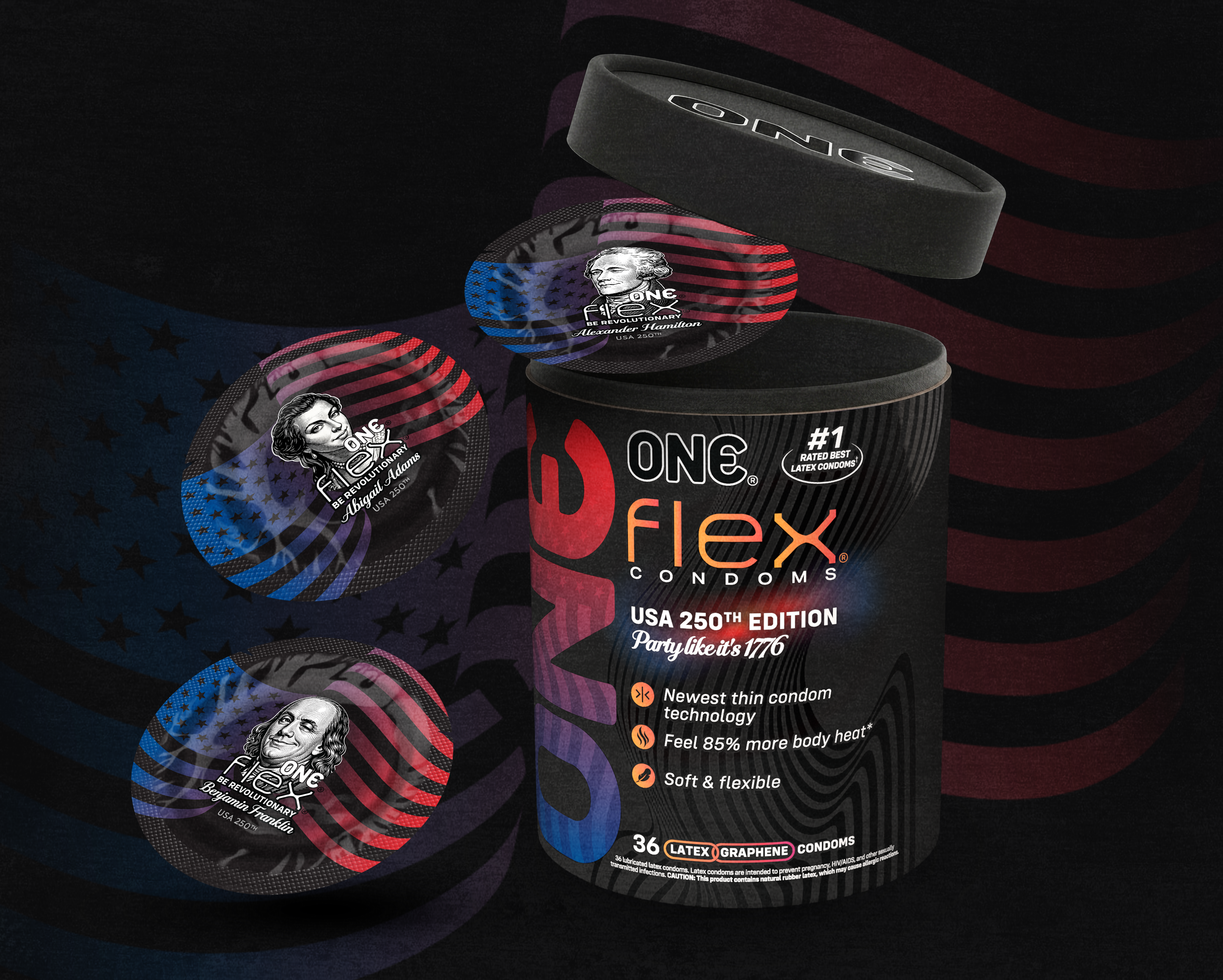
In honor of the 250th Anniversary of American Independence, ONE® Condoms is turning its signature round wrappers into a tribute to some of the original disruptors. This limited edition wrapper series is featured on the ONE® Flex® condom style.
Be Revolutionary
This limited-edition ONE® condom wrapper collection commemorates nine American Revolutionaries. These heroes understood a fundamental truth: to leave the world better than they found it, they had to BE REVOLUTIONARY! Now, that same spirit of defiance and progress is coming to your nightstand.
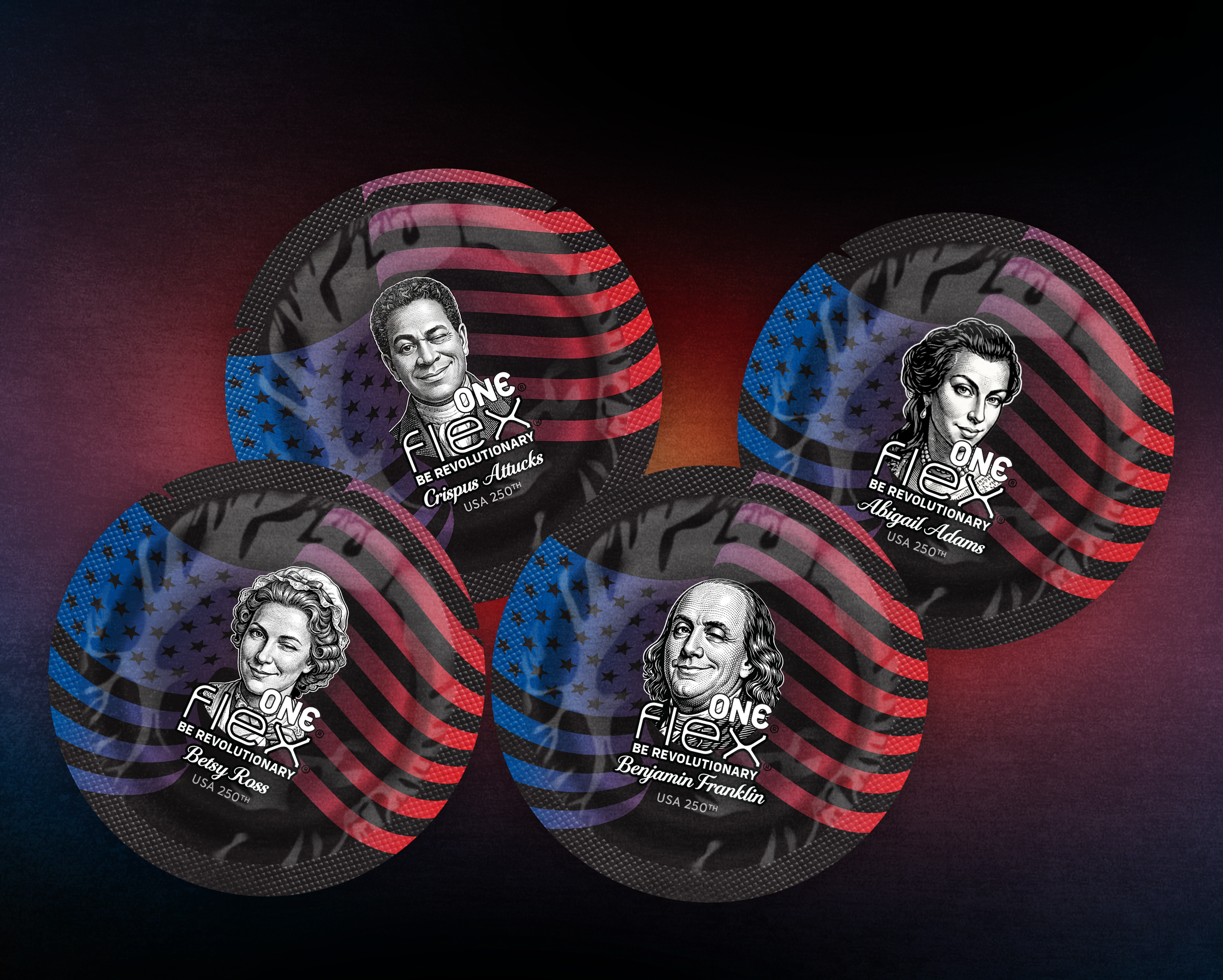
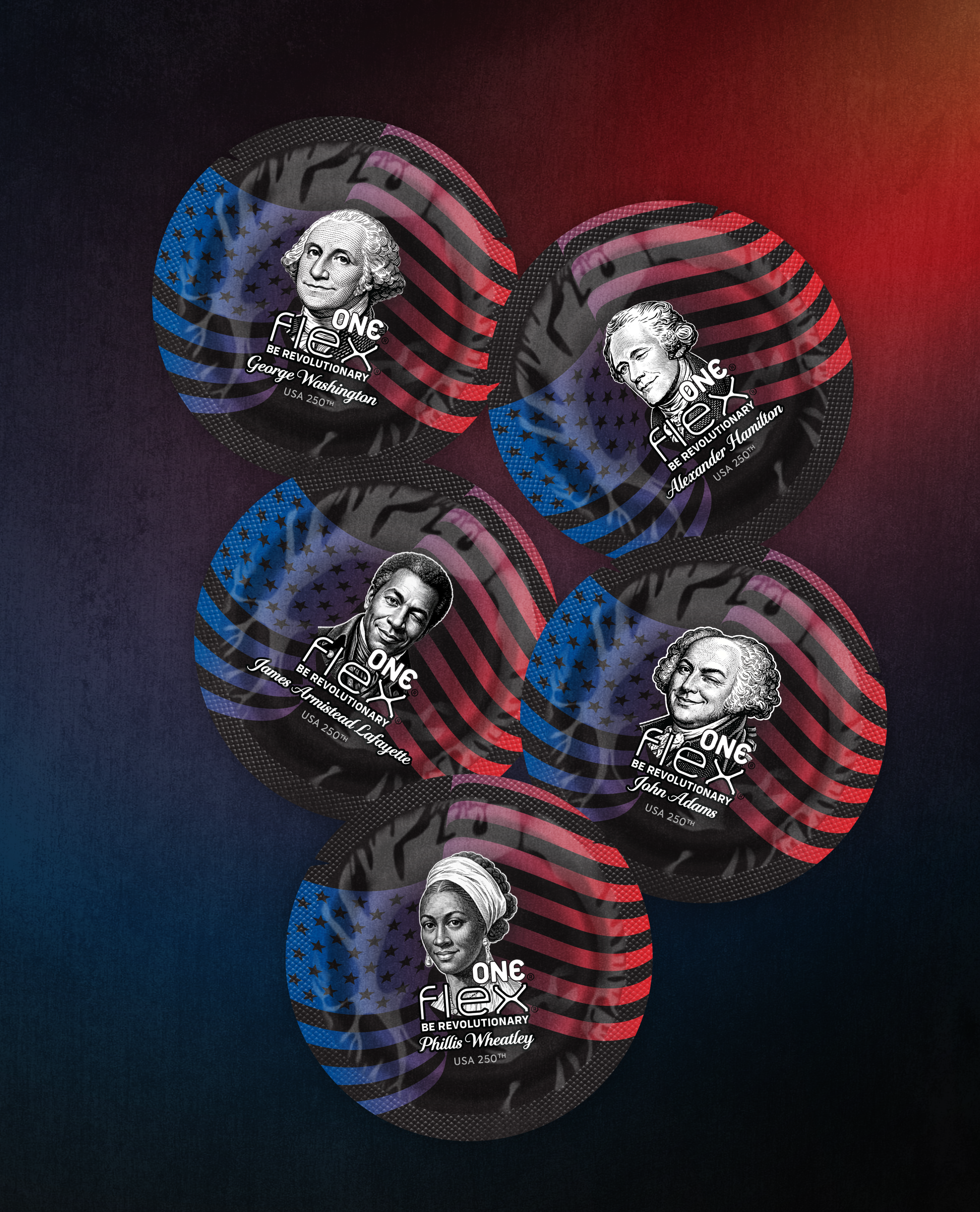
Featured on the wrappers are George Washington, James Lafayette, Betsy Ross, Alexander Hamilton, Crispus Attucks, Ben Franklin, Abigail Adams, John Adams, and Phillis Wheatley.
These commemorative designs are printed on the ONE® Flex® condom style. ONE® Flex® revolutionized the condom industry in 2023 by being the first condom in the world enhanced with the wonder material graphene. Flex is super thin and flexible — and features 85% better body heat transfer than standard latex condoms.

Quickie Questions
We’ve got answers — and humans.
If you didn’t find what you were looking for, our team is here to help with all things Flex, fit, and feel.
Which revolutionary historical figures will be on the ONE® Flex® condoms?
The limited ONE® Condom wrapper collection will feature nine revolutionaries from American history and those people are George Washington, James Lafayette, Betsy Ross, Alexander Hamilton, Crispus Attucks, Ben Franklin, Abigail Adams, John Adams, and Phillis Wheatley.
George Washington: He was the Commander of the Continental Army, the first U.S. President, and the Father of the Nation. Officially appointed as the commander-in-chief of the first American army in 1775, Washington’s commitment to the ideals of the Revolution and of the Enlightenment Age not only ensured American independence, it encouraged the formation and realization of a Constitutional government of the people, by the people, and for the people. Modern scholarship is quick to point out the innate hypocrisy of his standing as a wealthy slave owner in the Commonwealth of Virginia, but his role as a unifying figure was indispensable to winning the war and to the birth of the nation.
Phillis Wheatley: The first African-American author to be published, Phillis Wheatley lived a life of ambition. Sold into slavery as a young girl, Wheatley was formally emancipated shortly after the 1773 publication of her first book of poetry, living the rest of her life as a free woman. She was praised by George Washington and other notable revolutionaries. Overjoyed by Washington’s appointment to lead the Continental Army, she famously styled him "Generalissimo" and penned her tribute, “To His Excellency General Washington," in October 1775:
“The goddess comes, she moves divinely fair/ Olive and laurel bind Her golden hair/ Wherever shines this native of the skies/ Unnumber’d charms and recent graces rise.”
John Adams: A practicing lawyer in Massachusetts, Adams was an early adopter of revolutionary ideals. He rose to prominence as an opponent of the Stamp Act imposed on the American colonies in 1765, and shortly thereafter, famously acted as legal counsel for the British soldiers held responsible for the Boston Massacre in 1770. He served as a representative of the Continental Congress, a member of the committee that drafted the Declaration of Independence, and a crucial diplomat to the European states. Adams was the first Vice President under George Washington, and then served as the second U.S. President when Washington retired. Adams never owned slaves and viewed the practice as abhorrent.
Abigail Adams: A fierce abolitionist and an advocate for women’s rights, Abigail Adams lived a life of deep conviction. She would famously write to her husband John Adams to “remember the ladies” when it came time for the Continental Congress to draft a new code of laws for the independent nation. He sought her advice on many matters, and her writings on the state and affairs of life on the American home front during the revolution provide a valuable historical perspective. Like her husband, she was initially wary of violent Revolution, but later came to view it as a necessity in the face of British tyranny, and as an opportunity to promote women’s education and abolitionism. Unique for her time, Adams believed women should be entitled to the same natural rights granted to men in regards to life, liberty, and property. As she wrote:
“Do not put such unlimited power into the hands of the Husbands. Remember all Men would be tyrants if they could. If particular care and attention is not paid to the Ladies we are determined to foment a Rebellion, and will not hold ourselves bound by any Laws in which we have no voice, or Representation”
Ben Franklin: Ben Franklin was the senior Founding Father, a diplomat, inventor, scientist, and a true Renaissance man. Franklin was notable as a newspaper editor and printer, and he established both the University of Pennsylvania and the American Philosophical Society. He solidified his support in colonial America thanks to his role in forcing the British Parliament to repeal the unpopular Stamp Act. When the Revolution broke out, he was appointed as a delegate to the Continental Congress, where he would help shape the birth of the new nation.
Crispus Attucks: As the first adult to give his life for the American cause, Crispus Attucks holds a special place in our history. A former slave of African and Wampanoag descent, Attucks found work in Boston as a sailor and ropemaker, and it is there that he met his end. He was killed after taking two direct musket shots to the chest when he and a chaotic crowd of colonists confronted British soldiers outside the Old State House. Five colonists in total would lose their lives and several others were wounded as a result of the conflict, an event now known as the Boston Massacre. Little is known of Attucks's life outside of that monumental day, but he was buried as a hero alongside the other victims. Their shared grave can still be visited today at the Granary Burying Ground in Boston.
Alexander Hamilton: Hamilton was an early adopter of Revolutionary ideals, but only came to prominence after serving as an officer in the Continental army, and then eventually as Washington’s personal secretary on campaign. Eventually, he was given his own command and he participated in the Siege of Yorktown, the decisive battle of the Revolution. In the aftermath of the war, Hamilton was instrumental in the drafting of the Constitution, and his contribution to the Federalist Papers played a major role in the ratification of the document as the law of the land. He would go on to serve as the first Secretary of the Treasury, and his Federalist ideology and the party system it spurred would ultimately persist through to the modern day. He died famously in a duel with Vice President Aaron Burr in his late forties.
Betsy Ross: She was a skilled Philadelphia upholsterer celebrated in American folklore as the creator of the first national flag, today known as the Betsy Ross flag. The iconic design—featuring 13 alternating red and white stripes and 13 stars arranged in a circle on a blue canton—instantly conjures images of the Revolution. Popular legend states that Ross was secretly visited in 1776 by General Washington and a congressional committee. According to family tradition, she suggested using five-pointed stars instead of the proposed six-pointed design because they could be easily made with a single snip of her scissors. Ross produced flags for the Pennsylvania Navy during the war and successfully continued manufacturing government flags for another fifty years. Today, her legacy as a wartime businesswoman is honored at the historic Betsy Ross House in Philadelphia.
James Lafayette: Born into slavery as James Armistead, he served as a brilliant double agent for the Continental Army during the American Revolution. Posing as a runaway slave to infiltrate British camps, he successfully fed enemy commanders false information while funneling critical intelligence to the Marquis de Lafayette. Armistead's espionage was instrumental in trapping Lord Cornwallis at Yorktown in 1781, securing the decisive victory that won the Revolutionary War. Despite his heroic service, he was forced back into slavery after the conflict until his former commander, the Marquis, personally petitioned the Virginia legislature for his release. Formally emancipated in 1787, James adopted the surname "Lafayette" in honor of the French General, later acquiring land in Virginia where he lived out his days as a successful, independent farmer.
What is ONE® Condoms Doing for America 250?
ONE® Condoms is offering a limited edition USA 250 version of their ONE® Flex® Condoms right in time for the 4th of July. These condoms feature the faces of revolutionary historical figures from the United States of America in front of the iconic stars and stripes of the American flag.
What are ONE® Flex® graphene condoms?
ONE® Flex® graphene condoms are one of the latest and greatest advancements in condom technology. They are ultra-thin latex condoms that are enhanced with graphene - a material used by NASA that is 200 times stronger than steel and 1 million times thinner than human hair. Graphene is also incredibly conductive; when combined with latex, this creates a next-generation condom material that provides 85% better body heat transfer. The result is a condom that is thin, flexible, and provides skin-on-skin sensation.
Why is ONE® Condoms offering America 250 condoms for July 4th?
Being revolutionary is in our blood at ONE® Condoms where we fight for sexual freedom and liberation everyday. We’re passionate about using the latest technology to upgrade condoms, whether it’s our MyONE® Custom Fit® line of 52 condom sizes or our Flex® condom enhanced with graphene. We’re all about using the tiny canvas of a condom wrapper to make a big impact through art, and distributing condoms through unique partnerships. Our community programs inspire condom conversations, including programs like the ONE® on Stage band program, our Project Condom fashion shows, or our Team ONE® sports program.
So, we thought it was only right on this special occasion for our country to commemorate the revolutionaries that came before us on our most revolutionary condom. As we celebrate America’s 250th anniversary, we invite you to join us in our journey to promote sexual liberation and freedom for all. By looking to our revolutionary past, we hope it strikes the passion in you like it does to us and allows you to be revolutionary.